${loserAccounts} been merged into ${winnerAccount}.
A recent audit found these accounts to be duplicative. Addresses, order history and Q-global ordering for both accounts are now accessible via the ${winnerAccount} account. If something isn’t right, please contact us.
${loserAccounts} been merged into ${winnerAccount}.
A recent audit found these accounts to be duplicative. Addresses, qualified users, order history and Q-global ordering for both organizations are now accessible via the ${winnerAccount} account. If something isn’t right, contact us.
Blog
How do you stay up to date in your field? Our team of experts, authors, and specialists contribute regularly to our profession-specific blogs, keeping you informed of the latest industry trends, news, and innovations. Dive in below and check back often, as new content is added weekly.
Picture a student who aces class discussions but rarely turns in homework on time, or one who understands the material but freezes or acts out when the routine changes. Instead of jumping to conclusions about a student’s ability or motivation level, it’s good to take a step back to see what might be happening behind the scenes, such as an underdevelopment of executive function skills. Executive function skills are the brain’s self-management tools — like planning, organization, time management, and self-control — that help students stay on task and reach goals. When a student needs to deliver academically, executive functions get them started, keep them on track, and help them cross the finish line. By contrast, when students struggle with executive functions, the impact on academics and overall school success can be widespread.
Educators sometimes feel like Dorothy in The Wizard of Oz, encountering a trio of formidable challenges along the Yellow Brick Road: reading difficulties (dyslexia), writing difficulties (dysgraphia), and math difficulties (dyscalculia). These three learning disabilities are distinct in their core features – dyslexia affects reading and spelling, dysgraphia impacts writing (especially handwriting and spelling), and dyscalculia involves persistent trouble with number sense and math – yet they often travel together in the same student. In other words, it’s not unusual for a child to experience a mix of reading, writing, and math needs all at once.
Police officers are entrusted with serving and protecting the communities they work in — a responsibility that requires professionalism, sound judgment, and the ability to remain composed in a wide range of situations. From routine traffic stops to emergency responses, officers are tasked with assessing evolving circumstances, communicating effectively with civilians and other officers, and making decisions that prioritize public safety. Supporting officers’ readiness for these responsibilities begins long before they enter the field.
Law enforcement must go beyond evaluating physical fitness and technical qualifications, which is why departments are increasingly recognizing the essential nature of psychological readiness. Evidence-based psychological screening helps agencies identify candidates who possess the resilience, integrity, and judgment necessary for a successful career in policing. When implemented thoughtfully, psychological screening strengthens officer readiness, fair hiring practices, and supports trust in the profession.
While speech-language pathologists (SLPs) stay current with evidence-based therapy approaches in championing communication, many continue to rely on traditional, paper-based assessment methods. Although these methods may feel comfortable and familiar, they often create inefficiencies, from manual scoring errors to time-consuming data entry.
That’s why SLPs are increasingly turning to digital assessments as a practical way to streamline workflows, improve accuracy and deliver faster insights for individualized therapy plans. Leveraging today’s technology enables SLPs to spend less time on logistics, freeing up time to focus on students’ communication goals.
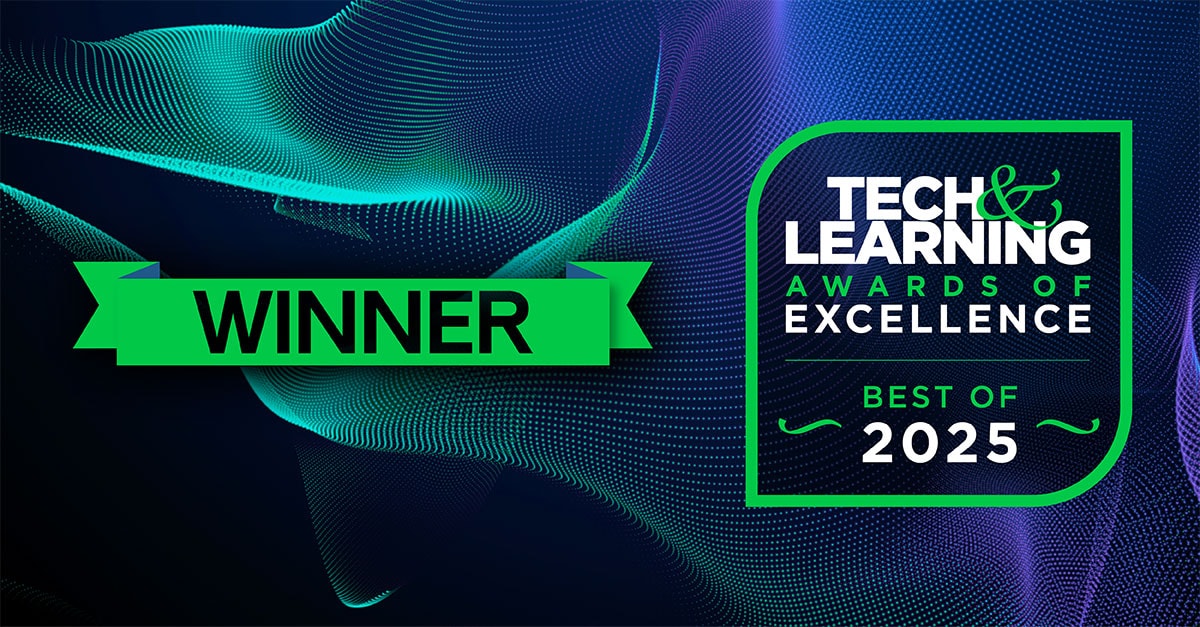
HOBOKEN, N.J. — February 23, 2026 — Pearson (FTSE: PSON.L), the world’s lifelong learning company, today announced that Revibe®, its AI‑enabled wearable designed to support focus and self‑regulation, has been named a winner in the Tech & Learning Awards of Excellence: Best of 2025 in the Primary Education category.
The Best of 2025 recognizes educational technology products released in the past year that have demonstrated a meaningful impact on teaching and learning. Judged by a panel of industry experts, winning products are evaluated on criteria including data privacy and governance, integration and interoperability, and outcomes and impact.
Developed by Pearson Clinical Assessment and powered by Samsung, Revibe supports learners by providing discreet, personalized prompts that encourage self‑awareness and on‑task behavior. While recognized by Tech & Learning for its impact on primary education, Revibe is designed for people of all ages and can be used across a range of learning and everyday settings.
Delivered via a Samsung Galaxy Watch7 configured to minimize distractions, Revibe uses gentle vibration reminders to help users refocus—without disruption or stigma.
Using AI and advanced modeling to learn individual patterns over time, Revibe translates signals related to attention and activity into timely prompts and insights. Educators can view engagement trends through a companion app dashboard, supporting more informed conversations and decisions about how best to support learning.
“Revibe reflects Pearson’s commitment to developing fit‑for‑purpose AI tools that not only enhance learning experiences, but address real‑world barriers to learning,” said Clay Richey, Managing Director for Pearson Clinical Assessment. “By combining assessment expertise with educational technology, Pearson applies AI in ways that support confidence, independence, and meaningful engagement in learning.”
Commenting on the awards, the Tech & Learning editorial team shared that "the awards brought a huge number of high‑quality entries. Our panel of industry experts judged the winning products to be those that were most impactful in helping schools improve teaching and learning during 2025. Every winner should be really proud of their accomplishments.”
About Pearson
At Pearson, our purpose is simple: to help people realize the life they imagine through learning. We believe that every learning opportunity is a chance for a personal breakthrough. That's why our c. 18,000 Pearson employees are committed to creating vibrant and enriching learning experiences designed for real-life impact. We are the world's lifelong learning company, serving customers in nearly 200 countries with digital content, assessments, qualifications, and data. For us, learning isn't just what we do. It's who we are. Visit us at pearsonplc.com.
Media Contact: allison.bazin@pearson.com
Pearson and Revibe are trademarks, in the US and/or other countries, of Pearson plc. Samsung is a registered trademark of Samsung Electronics Co., Ltd.
Get a first look at the BASC-4 (Behavior Assessment System for Children, Fourth Edition) and how it supports meaningful insight from screening through comprehensive evaluation. This brief overview highlights key updates and innovations designed to help inform confident decision-making. Watch the video below to explore what’s new with the BASC-4.
Writing is one of the most complex academic skills students must master, requiring the seamless integration of cognitive, linguistic, and motor abilities. For some students, writing difficulties can create significant barriers to academic success and self-expression. However, when professionals in education and allied health work together as a cohesive team, they can work with students to address every facet of the writing process—from the initial spark of an idea to the final letters formed on paper.
Today’s clinicians play a critical role in supporting the mental health and well-being of young people amid growing awareness and need. According to the September 2025 issue of Pediatrics, the journal of the American Academy of Pediatrics (AAP), 13% to 20% of children live with a mental health, emotional and behavioral challenge. An additional 19% exhibit symptoms that cause impairment or distress, but don’t meet diagnostic criteria for a specific disorder. Kids and teens are also increasingly receiving multiple diagnoses — e.g., depression and anxiety or autism and ADHD.