
Blog

  • How Embedded AI Can Help Clinical Educators Reclaim Their Time

    by

    As caseloads grow well beyond recommended ratios, K-12 clinical educators can feel overwhelmed by administrative duties. And the traditional reprieves, like hiring more instructors or reducing responsibilities outside core focus areas, aren’t forthcoming. 

    The result: clinical educators’ burnout worsens, and schools can’t adequately serve each student who needs support.

    “Technology” is often put forward as a solution to these competing needs. Yet often the very tools that promise to save clinical educators time end up creating more work: new processes to master, time lost to task switching between apps, and challenges collaborating across disconnected systems. 

    However, the arrival of artificial intelligence (AI) embedded in the platforms and systems K-12 educators already use offers an opportunity to reimagine how technology can help clinicians, specifically by reclaiming time from routine tasks.

    Six in 10 classroom educators reported using AI-driven tools in 2025, according to Education Week data. That’s double the share who said so in 2023. Specialists are using the technology, too. For example, nearly 7 in 10 school psychologists in a recent study reported using AI in the prior 6 months, most often for tasks such as data analysis, reporting, and communication. Other specialists, such as speech-language pathologists, are also optimistic that AI can improve assessment and diagnosis. 

    “There’s a new opportunity for clinical educators, in particular, to explore embedded AI at the assessment level — specifically, how it can help turn results into action through better analysis, reporting, and recommendation generation,” said Richard Johnson, Lead, Product Management - Q Platforms at Pearson Clinical Assessment.

    In this article, we explore how integrating contextual, workflow-native AI to understand, communicate, and act on assessment results can ease clinical educators’ administrative burden and free them up to ensure students get the diagnoses and supports they need. 

    Read more
  • Revibe Wins Tech & Learning Awards of Excellence: Best of 2025!

    by
    HOBOKEN, N.J. — February 23, 2026 — Pearson (FTSE: PSON.L), the world’s lifelong learning company, today announced that Revibe®, its AI‑enabled wearable designed to support focus and self‑regulation, has been named a winner in the Tech & Learning Awards of Excellence: Best of 2025 in the Primary Education category. 

    The Best of 2025 recognizes educational technology products released in the past year that have demonstrated a meaningful impact on teaching and learning. Judged by a panel of industry experts, winning products are evaluated on criteria including data privacy and governance, integration and interoperability, and outcomes and impact. 

    Developed by Pearson Clinical Assessment and powered by Samsung, Revibe supports learners by providing discreet, personalized prompts that encourage self‑awareness and on‑task behavior. While recognized by Tech & Learning for its impact on primary education, Revibe is designed for people of all ages and can be used across a range of learning and everyday settings. 

    Delivered via a Samsung Galaxy Watch7 configured to minimize distractions, Revibe uses gentle vibration reminders to help users refocus—without disruption or stigma. 

    Using AI and advanced modeling to learn individual patterns over time, Revibe translates signals related to attention and activity into timely prompts and insights. Educators can view engagement trends through a companion app dashboard, supporting more informed conversations and decisions about how best to support learning. 

    “Revibe reflects Pearson’s commitment to developing fit‑for‑purpose AI tools that not only enhance learning experiences, but address real‑world barriers to learning,” said Clay Richey, Managing Director for Pearson Clinical Assessment. “By combining assessment expertise with educational technology, Pearson applies AI in ways that support confidence, independence, and meaningful engagement in learning.” 

    Commenting on the awards, the Tech & Learning editorial team shared that "the awards brought a huge number of high‑quality entries. Our panel of industry experts judged the winning products to be those that were most impactful in helping schools improve teaching and learning during 2025. Every winner should be really proud of their accomplishments.” 

    About Pearson 

    At Pearson, our purpose is simple: to help people realize the life they imagine through learning. We believe that every learning opportunity is a chance for a personal breakthrough. That's why our c. 18,000 Pearson employees are committed to creating vibrant and enriching learning experiences designed for real-life impact. We are the world's lifelong learning company, serving customers in nearly 200 countries with digital content, assessments, qualifications, and data. For us, learning isn't just what we do. It's who we are. Visit us at pearsonplc.com. 

    Media Contact: allison.bazin@pearson.com 

    Pearson and Revibe are trademarks, in the US and/or other countries, of Pearson plc. Samsung is a registered trademark of Samsung Electronics Co., Ltd.   

    Read more


  • The 2025 Research Call is open for submissions!

    by

    Hiker with backpack facing water and mountains

    We are proud to announce the new Call for Research published by Pearson Clinical Assessment. Our goal is to ensure that Pearson assessments comply with the highest standards of quality and support research that investigates the validity or efficacy of our products. We are inviting United States-based faculty members, graduate students, and qualified researchers to submit their proposals no later than August 15, 2025.

    Read more
  • Digital Tools Are Shaping the Future of Preventive Mental Health Care

    by

    Person in blue shirt sitting on bed using a tablet, with a small dog looking at them, in a cozy room with minimal decor.

    The landscape of mental health care is undergoing a significant transformation, driven by the integration of digital tools. Given that less than half of the 57.8 million adults diagnosed with mental illness received mental health services in the past year, the potential for digital technologies to enhance mental health care and prevention is becoming increasingly evident. Untreated mental health conditions such as depression and anxiety can have profound long-term health, social and economic consequences, emphasizing the need for prioritizing preventive mental healthcare.

    Read more
  • How to leverage digital assessments for maximized student outcomes

    by Kara Canale M.Ed., NCSP, Clinical Assessment Consultant at Pearson

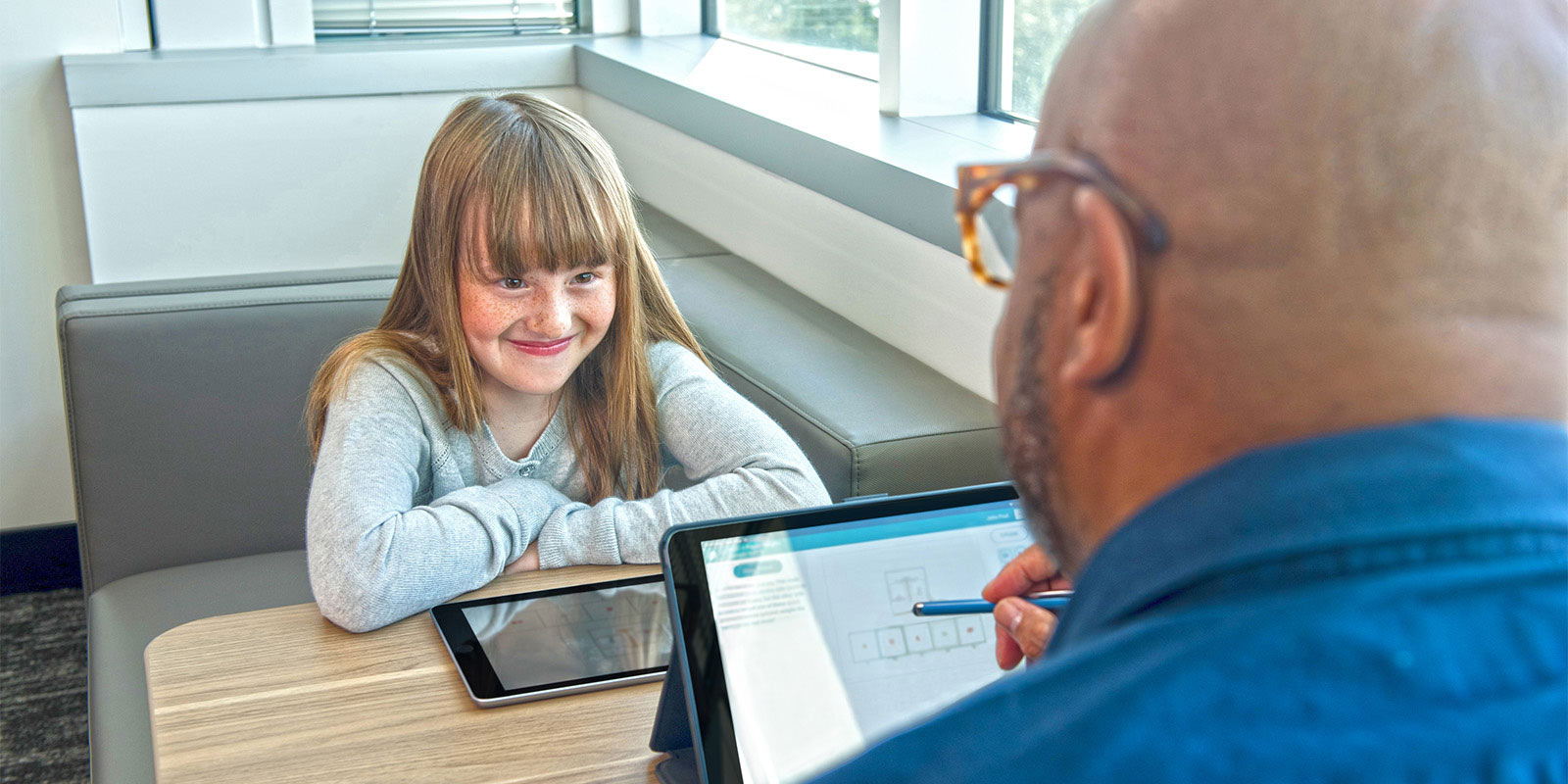
    During an assessment, a young girl smiles at a man across the table; both have tablets.

    Digital assessments have emerged as a powerful tool for measuring student learning and understanding. They promote equity through fair and unbiased results while offering real-time feedback that allows educators to track student achievement and make timely adjustments for personalized assessment.

    I would say that digital assessments — along with their robust scoring and interpretation capabilities — are the biggest game changers in the educational assessment industry to date. They’ve revolutionized how practitioners can gather data and engage with their students, all while reducing human error. 

    As a former school psychologist, digital assessment was a powerful tool that would give me accurate and insightful results, allowing me to better collaborate with educators and families to support the overall well-being of the children I was working with. The time savings I gained from digital assessment enabled me to employ other extremely valuable skill sets, such as direct interventions with students and ongoing consultation with staff, parents, and administration.

    Yet, as educators embrace the shift to these resources, facing the many choices available, the logistics involved in administration, and the best ways to analyze data for individual support can feel overwhelming. In my current role as a member of the K-12 education team for Pearson Clinical Assessments, I often work with educators to help them select the right digital assessment tools for their district’s unique needs. I also offer strategies for effective administration and results interpretation.

    Here are some of the digital assessment benefits and best practices I regularly share in those discussions.

    Read more
  • The 2024 Research Call is open for submissions!

    by

    Hiker with backpack facing water and mountains

    We are proud to announce the new Call for Research published by Pearson Clinical Assessment. Our goal is to ensure that Pearson assessments comply with the highest standards of quality and support research that investigates the validity or efficacy of our products. We are inviting United States-based faculty members, graduate students, and qualified researchers to submit their proposals no later than August 16, 2024.

    Read more
  • Assess to de-stress: How digital assessments support patients’ and providers’ mental health

    by

    client hands and doctor hands on tablet

    Efficient diagnostic tools can better address mental health in patients — and providers. Today, about one in four adults experiences a diagnosable mental health disorder in a given year. Many of these adults are your patients. And many others are your healthcare staff. This leaves healthcare organizations in the position of supporting patients who may struggle to get the care they need and supporting staff who may struggle to deliver proper care.  

    Read more
  • Ease staff workload and help students succeed with digital assessments

    by

    Child working on tablet.

    You don’t need to go far to hear about the staffing woes in our schools, and the most critical needs are within the special education and school psychologists' departments. These education professionals and their peers, including SLPs and reading specialists, need to assess more students than ever to identify the students who need instructional, speech, and mental health support — with less time and fewer resources at their disposal.

    Read more