

Continuing the Conversation
by
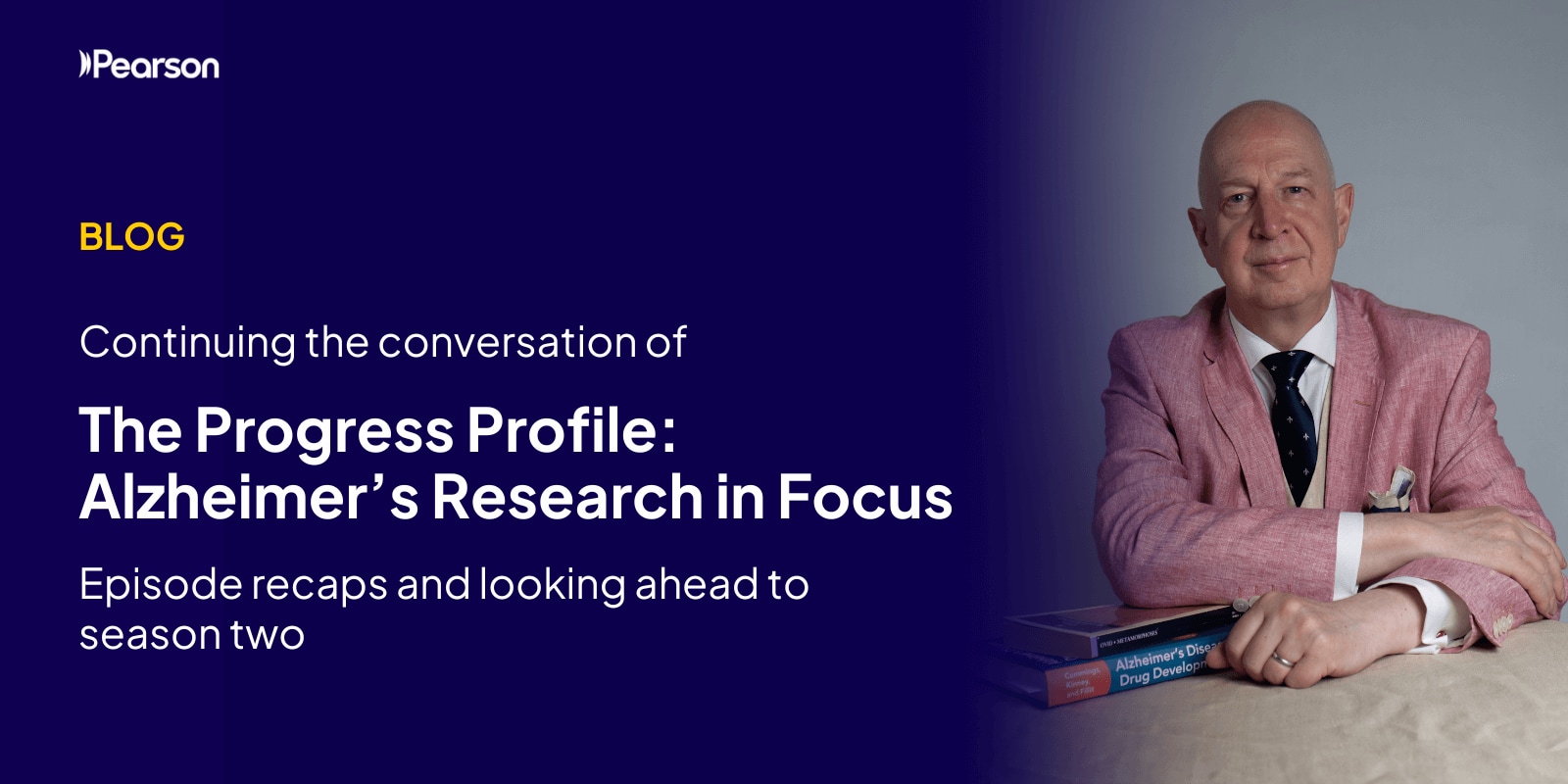
What’s Ahead in season two of the podcast series, “The Progress Profile: Alzheimer’s Research in Focus.”
How do you stay up to date in your field? Our team of experts, authors, and specialists contribute regularly to our profession-specific blogs, keeping you informed of the latest industry trends, news, and innovations. Dive in below and check back often, as new content is added weekly.
by
What’s Ahead in season two of the podcast series, “The Progress Profile: Alzheimer’s Research in Focus.”
by
Think about all the students you’ve met in your life. Likely, faces or names pop into your mind for different reasons—the one who had the biggest smile and contagious positive attitude, the one who challenged your every move in the classroom, the one who sat silently and you never got to know well, the one who you thought of as “a diamond in the rough” and made your heart sing with any personal win. And so many others.
Inevitably, your mind will cross to one or more students you were genuinely concerned about academically. That tenth grader who was “so done” with school after what felt like a career worth of hard but needed to get to graduation. That third grader who, when work was handed back, saw the score, turned the paper over, and side-eyed the papers of classmates nearby with an expression change that looked worried, and you knew struggled with reading, attention, or executive functioning.
Let’s focus on the “worried” and “so done” for a minute. These two student observations may have been behavioral markers of stress and anxiety. What other markers do you see in your classrooms related to stress and anxiety for academic achievement today? Empirically, we’ve learned that depression and anxiety have increased 25% worldwide post pandemic (WHO, 2022). Certainly, not all of that 25% is driven by academics, but the part that is matters to us in education.
The academic demands of the classroom are heavy with communication and language requirements. For students with listening, speaking, reading, or writing challenges, they must manage classroom content requirements in every subject while also working through cognitive or linguistic barriers. Not only do they get stressed, worried, or anxious about meeting class requirements, but also about keeping up while managing the hurdles of language and/or learning difficulties (and maybe hiding struggles from peers or teachers). Exhausting too? Often.
As professionals, we want to understand the impact of appropriately high academic goals on students. We need to evaluate and monitor stress and anxiety related to academics and ensure that our “teacher talk” addresses the skills for managing school workloads well so our students will thrive with their differing gifts and abilities. We need to know where their strengths can help them and where they will hit roadblocks that need detours to get the academic jobs done, including potential areas of stress and anxiety. They need cheerleaders with whip-smart strategies that work, and curious teachers who believe in the combined power of evidence and learning with humanity.
And we need to look our students in the eye when we see or hear those markers of stress and anxiety and say, “You are safe with me. I have your back in school. You will have to work hard, and that is good for you. I’m here to help.”
---
Looking for screening, assessment, intervention, or monitoring resources for behavior, learning difficulties, or communication/language? Visit our website and contact your Assessment Consultant.
World Health Organization. (2022, March 2). COVID-19 pandemic triggers 25% increase in prevalence of anxiety and depression worldwide. https://www.who.int/news/item/02-03-2022-covid-19-pandemic-triggers-25-increase-in-prevalence-of-anxiety-and-depression-worldwide
Read more