

Continuing the Conversation
by
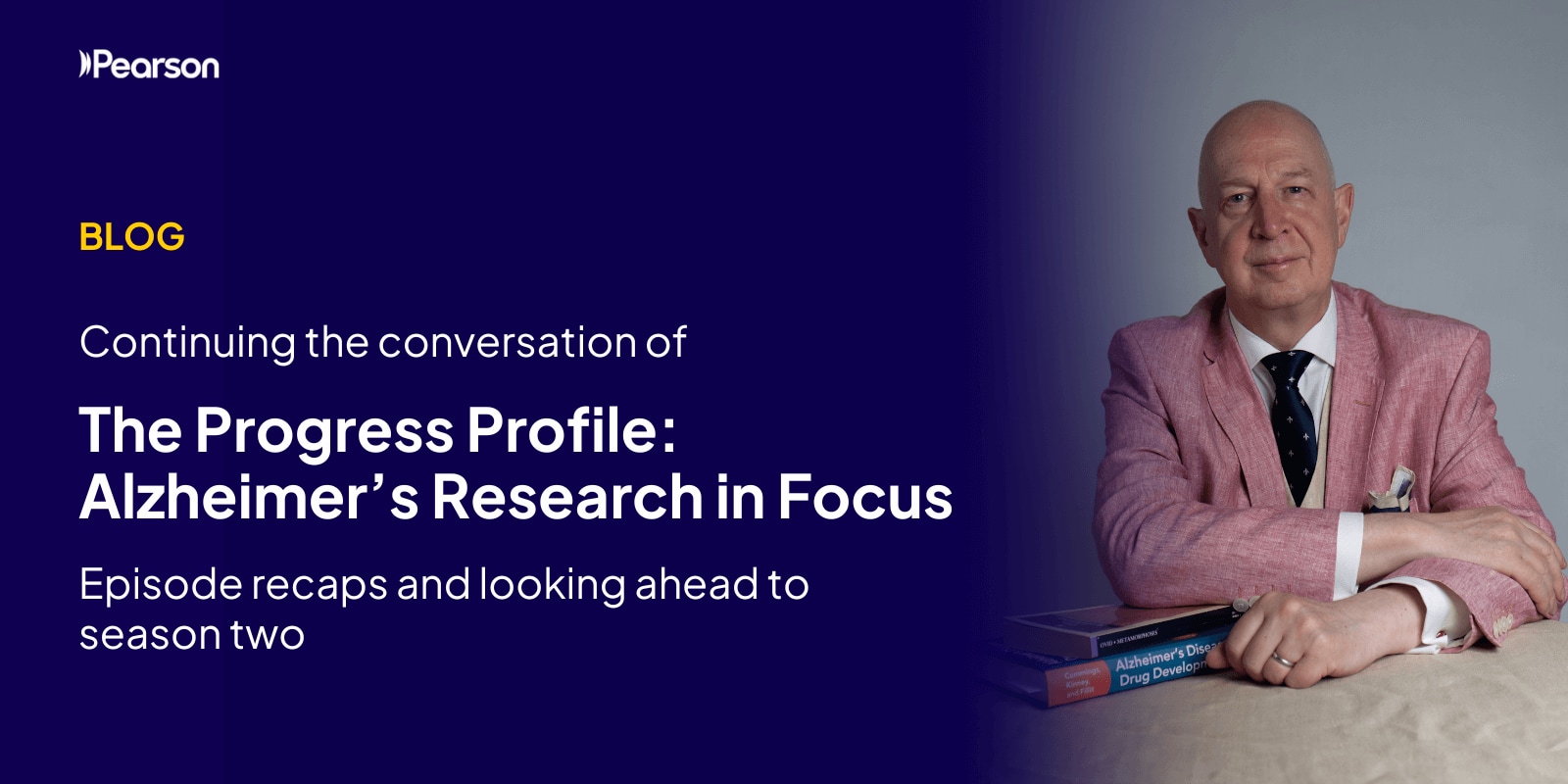
What’s Ahead in season two of the podcast series, “The Progress Profile: Alzheimer’s Research in Focus.”
Alzheimer’s disease (AD) research is experiencing an unprecedented surge of innovation. New drugs, new diagnostics, and new ways of measuring cognition are transforming how researchers understand and manage the disease.
The spirit of transformation defined season one of “The Progress Profile: Alzheimer’s Research in Focus,” a Pearson-sponsored podcast series hosted by cognitive neuroscientist Dr. John Harrison. Season two will be filled with engaging insights from top experts in the field of Alzheimer’s disease research.
Across four episodes in season one, Harrison and leading global researchers explored how digital tools, biomarkers, and lifestyle interventions are driving the next wave of Alzheimer’s breakthroughs, as well as the ways science, technology, and clinical practice are converging to change the trajectory of AD care.
Season 1 Recap
Episode 1: The season opened with Jeffrey Cummings, M.D., research professor at the University of Nevada, Las Vegas, who underscored a central challenge in modern Alzheimer’s research: The tools used to measure cognition haven’t kept pace with our understanding of the disease.
Cummings suggested that digital tests could give researchers and patients a clearer window into subtle changes in cognition, well before symptoms appear on traditional scales. The result: better trial outcomes, faster insights, and more effective treatments.
Episode 2: Philip Scheltens, M.D., Ph.D., professor of neurology and managing director of the Alzheimer Center Amsterdam, shared insights about the amyloid hypothesis and the growing recognition of tau protein as a pivotal biomarker in Alzheimer’s disease.
Through advanced imaging techniques, researchers can now visualize tau pathology in the living brain. This advancement enables earlier and more precise diagnosis and personalized treatment planning, potentially leading to more personalized treatments.
Episode 3: Miia Kivipelto, M.D., Ph.D., a neuroscientist and principal investigator of the Finnish Geriatric Intervention Study to Prevent Cognitive Impairment and Disability, better known as the FINGER trial, discussed her research on the effect of lifestyle choices on AD prevention.
Kivipelto’s landmark research demonstrated that a combination of a healthy diet, physical exercise, cognitive training, and managing heart disease risk factors can significantly slow cognitive decline and reduce the risk of AD. The research has inspired dozens of similar studies worldwide, underscoring a paradigm shift toward lifestyle modifications for AD prevention.
Episode 4: The season concluded with Rhoda Au, Ph.D., a professor at Boston University, who challenged listeners to rethink what constitutes cognitive assessment.
To Au, the future of testing lies not in static, episodic evaluations but in continuous, passive data collection through digital interactions, including gaming. Video games can measure critical cognitive skills such as spatial navigation, working memory, and reasoning in real time. By harnessing the power of big data, digital behaviors could complement clinical testing, offering unprecedented insight into the earliest phases of cognitive change.
Looking Ahead to Season Two
Season two of “The Progress Profile: Alzheimer’s Research in Focus” will build on this foundation, expanding the conversation beyond diagnostics and into the real-world application of emerging tools.
Harrison returns to host episodes featuring an exciting list of experts. Expect fresh voices, cutting-edge science, and practical insights for clinicians, researchers, and innovators who share a single goal: improving outcomes for patients and families living with AD that builds on the theme of season one: Progress isn’t just about new drugs or technologies; it’s about redefining how we measure, prevent, and understand a complex disease.