

Escape the Evaluation Backlog: Innovative Assessment Solutions for K-12 Leaders
by
If your district is like most others, you face a two-part challenge that is getting worse:
- You struggle to find and keep school psychologists, speech-language pathologists, and other student services specialists.
- The number of students who require IEPs and specialized support continues to rise.
Consider the numbers:
1,065 students per school psychologist — more than double the recommended 500:1 ratio.
Nearly 6 in 10 schools say staff shortages hurt their ability to provide mental health services.
Nearly 3 out of 4 elementary and middle schools struggle to fill special educator positions.
7.3 million students — or 15% of the K-12 population — now receive services under the Individuals with Disabilities Education Act (IDEA).
Nearly half of K-12 schools report growing conflict with families over IEPs.
There is no magic fix for staff shortages or the soaring demand for services. But you can provide the professionals conducting evaluations with tools that improve efficiency and student outcomes.
How? By giving them a digital assessment library that works.
Saving time and supporting students with digital tools
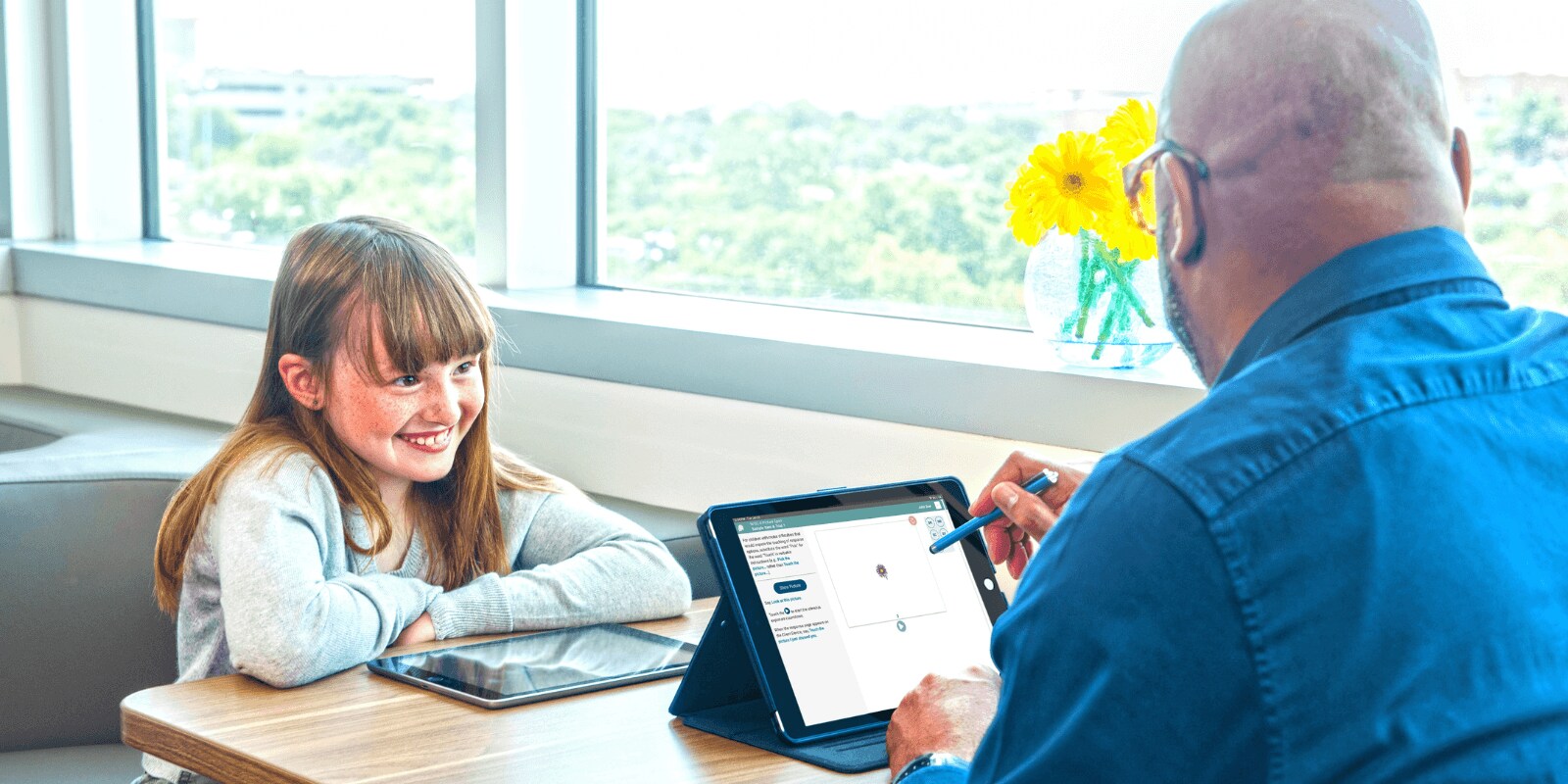
More school systems are turning to digital assessment tools to support their professionals in conducting efficient and comprehensive evaluations in a timely manner.
Take the schools of Montgomery County, Pennsylvania, for example. When the county adopted Pearson’s comprehensive Digital Assessment Library for Schools (DALS), the change proved transformational.
The Montgomery County Intermediate Unit supports more than 200 schools. Jean Miksch, a nationally certified school psychologist with the Intermediate Unit, explains that DALS has reduced pressure on clinicians by making them more efficient and effective.
The benefits include:
Portability: “I used to haul around bulky suitcases filled with paper assessments,” Miksch says. “Now I carry a small bag with a couple of iPads, and I’m good to go.”
Flexibility: DALS supports a wide range of student needs, from mild speech issues to complex developmental challenges.
Equitable Access: Every school in the county has access to the same assessments, eliminating resource gaps among campuses.
Efficiency: Clinicians can swap assessments mid-session, score them automatically, send and track behavior forms electronically, and use built-in checklists to prepare reports faster.
Student engagement: “The digital format really helps kids remain engaged,” Miksch explains. One student stayed locked in for 90 minutes — no breaks needed.
Even tech-resistant clinicians have come around on DALS. “Once they start using it, they realize how much time it saves them,” Miksch says. Pearson’s Chuck Eberle, who
manages the Digital Assessment Library product line, echoes this point: “We see more and more school clinicians not only accepting digital tools but even asking for more functionality.”
Earning families’ trust
High-quality digital assessments also help rebuild trust with families.
One way they do so is by giving clinicians more time to communicate. “When psychologists are overwhelmed, they tend to rush to complete the IEP,” Miksch says. “But it’s so important to sit down with parents and discuss the assessment results.” Families need clear explanations: What tests were used? What do the scores mean? What do they reveal about the child?
Digital libraries make those conversations easier by providing detailed analytics and progress-tracking tools. Growth scale values, for example, show a student’s performance over time, not just how that student does in relation to a peer group.
“It’s important for parents to understand what we’re doing,” Miksch says. “Then it’s not as scary.”
This transparency matters more than ever as families express more concerns about IEP decisions.
Containing assessment costs
“The DALS license has helped districts control costs and budget more accurately,” Miksch explains.
Before adopting DALS, districts had to guess which assessment materials they would need for the year. Those estimates were often wrong, leading to delays and cost increases as districts ordered extra forms.
Now districts have all the assessments they need under one license — no waiting, no added expense, no extra administrative burden.
A solution both effective and cost-effective
The shortage of school clinicians isn’t going away, and the number of students needing assessment will continue to rise. But a high-quality digital assessment library can help schools handle these challenges.
The digital tools offer school leaders a practical, cost-effective way to support overburdened staff and give students the support they deserve.
Want to learn more about the transformative power of DALS? Check out Jean’s complete story here.